Continuous Tunnel Convergence Monitoring with Laser Tiltmeters
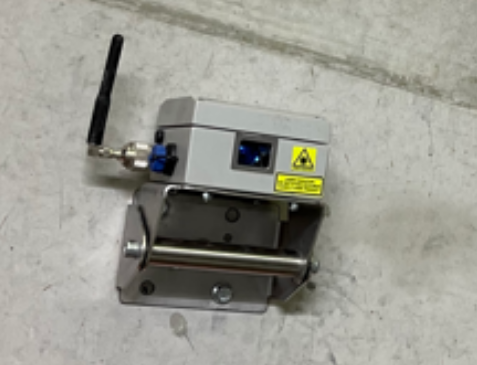
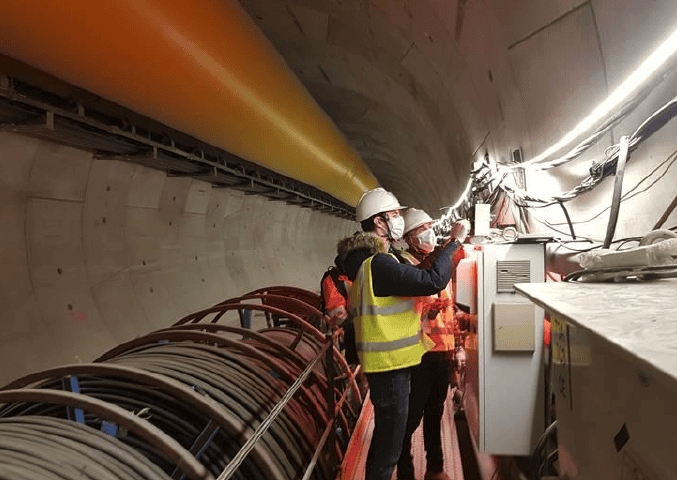
Worldsensing laser titlmeter used by UBY at the North American Tunnel project
Introduction
In modern tunnel construction, understanding how a tunnel lining behaves after installation is critical. Even when tunnel rings are designed and installed correctly, ground pressure, grout performance, and construction activities can all influence their long-term stability. For a major tunnel project in North America, the challenge was to move beyond periodic manual surveys and implement a continuous tunnel convergence monitoring solution.
Firstly, tunnel convergence refers to the gradual inward movement or deformation of a tunnel lining under external pressure. Detecting these changes early allows project teams to intervene before minor movements become more significant concerns.
Traditionally, convergence monitoring relies on manual surveying. Surveyors install monitoring points around a tunnel ring and periodically measure the distances between them. By comparing these readings over time, engineers can determine whether the lining is deforming. While this approach has been used successfully for decades, it has its glaring limitations. It requires regular site access, provides only periodic data snapshots, and is resource-intensive in active construction environments. Long term movement measurements after ring installation are often a key to controlling the quality of the ring installation, and the correct grouting of the annular space sealing the ring with the existing ground.
To address these, the tunnel project team and UBY deployed Worldsensing laser tiltmeters as the automated convergence monitoring solution.
How Laser Tiltmeters Works
What makes a laser tiltmeter different from a conventional tiltmeter is its ability to combine two measurement technologies in a single instrument.
The sensor continuously measures both:
Distance between the instrument and the target surface.
Tilt or angular movement of the sensor.
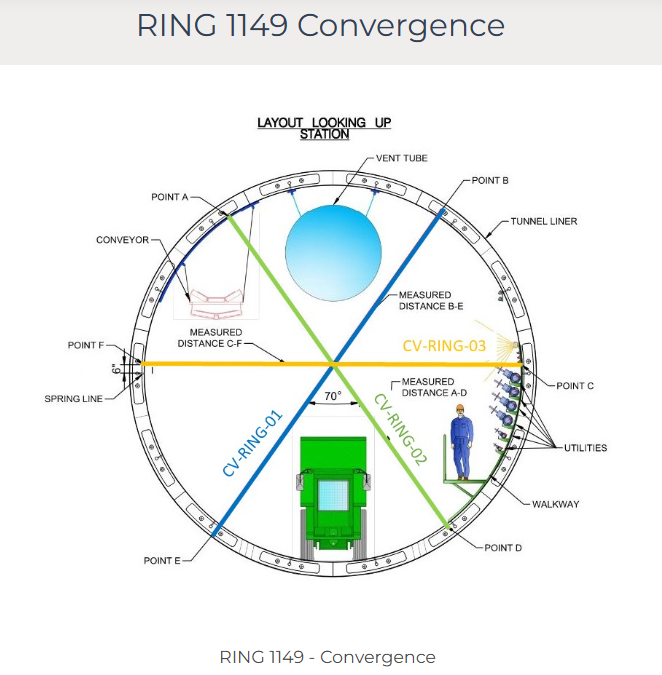
The laser component measures the distance between two points, i.e. the sensor’s location (Point A) and the point diametrically opposite to it (Point B). Along with this, the integrated tiltmeter records any angular changes occurring across 3-axis at the sensor location as well as helps calculate the tilt of the other point.
This combination offers an important advantage. If a change in distance is detected, engineers can use the tilt data to determine whether the movement originated from the monitored structure or from the sensor’s mounting location. This improves confidence in the monitoring data and helps reduce uncertainty when interpreting results.
Depending on site conditions, this sensor can typically measure distances from a few centimeters up to 150m. Tunnel rings are the perfect reflective surface for these laser tiltmeters. Readings can be collected as frequently as every 30 seconds to every 24 hours, although hourly measurements are often sufficient for convergence applications.
Why We Monitored the Tunnel Ring Stability
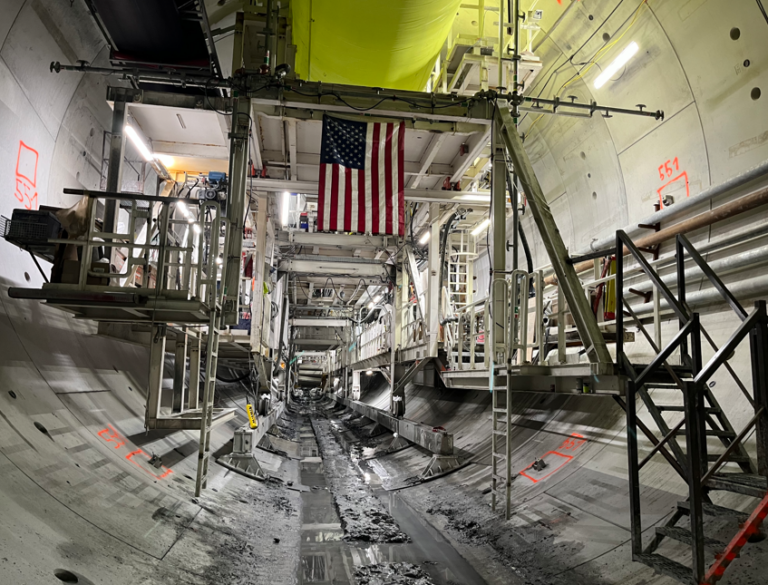
The monitoring on this project focused on the behavior of installed tunnel rings.
During tunnel construction, a void exists between the outside of the ring and the surrounding ground which is filled with grout to provide support and create a stable connection. However, grout performance needs to be continuously monitored. In some conditions, grouts can migrate into fractures, be displaced by water, or fail to provide uniform support around the ring. When this occurs, uneven loading can develop and cause gradual deformation of the tunnel lining.
Laser tiltmeters were installed to continuously monitor critical distances across selected tunnel rings. Rather than waiting for periodic survey campaigns, engineers could review automated measurements collected around the clock.
Diagram Explaining Tiltmeter Placements
How Early Detection Led to Early Intervention
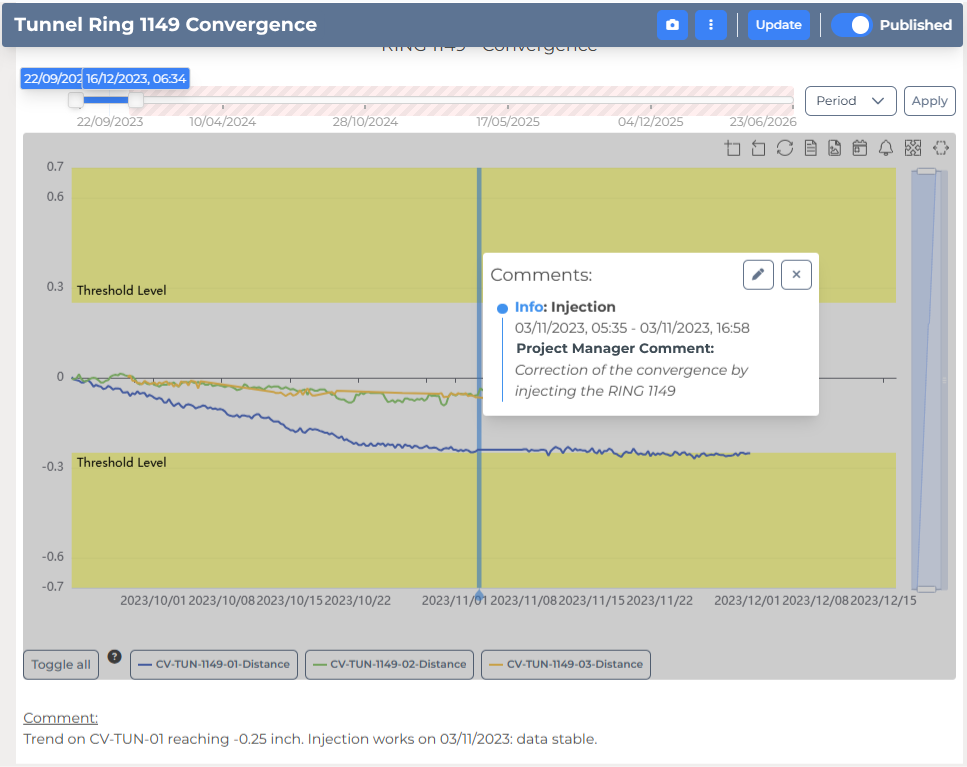
During the project, monitoring data on our platform uMonitorrevealed a gradual but persistent change in measured distances, indicating slow movement within the tunnel lining. Because measurements were being collected continuously, the trend was identified early enough for the project team to respond before critical limits were reached.
Further investigation suggested that additional support was required behind the lining. Thus, the construction team carried out supplementary grout injections to improve ground support around the affected ring. Following this, monitoring data showed that movement stabilized, providing evidence that the corrective measures had been successful.
Laser Tiltmeter reading along with comment on uMonitor
Lessons from the Field
The project also highlighted several practical considerations when deploying laser tiltmeters.
As with any optical measurement technology, maintaining a clear line of sight between the sensor and its target is essential. Equipment, temporary work, and construction activities must be considered during installation planning to avoid obstructing measurements. Additionally, installing it on a rocky or irregular surface can also reduce the measurement of reliability due to target instability.
The laser target surface conditions also play an important role as the measurements may lose accuracy if the surface accumulates dust or grime. In this case, a manual cleaning intervention can be an easy fix to the monitoring solution.
When deployed in a suitable environment, however, the technology provides a powerful tool for automated deformation monitoring.
In this North American tunnel project, the technology helped engineers verify ring stability, assess grout performance, detect movement trends at an early stage, and validate the success of remedial works. The result was a more proactive approach to tunnel convergence monitoring that delivered actionable data when it mattered most.
Our UBY Environment case studies
UBY Environment
Noise Monitoring Sensors: Measurements and Compliance
Dive deep into the basics of noise monitoring measurements in sensors and their classes and understand best practices for your ...