Latest NYC DEP Construction Noise Monitoring Mandates 2026; How ANMP Impacts the Construction Industry?
New York City’s Department of Environmental Protection (DEP) is making construction noise monitoring regulations tighter for the needs of its inhabitants. Starting April 21, 2026, large construction sites in NYC with after-hours work will need to implement continuous real-time noise monitoring for the duration of their work. Who must comply with the NYC noise monitoring requirements and how can contractors upgrade your monitoring systems for the Alternative Noise Mitigation Plan (ANMP) regulation, let’s understand together.
Do All NYC Construction Sites Must Comply with the New Noise Monitoring Requirements?
Quick answer? No. After receiving more than 20,000 construction noise complaints for after hour construction work in NYC in 2023 alone, the DEP wanted to mitigate the point of audible tension between inhabitants & contractors. Under the new NYC ANMP regulation, projects that check the following list will need to upgrade their noise monitoring equipment:
Size: 200,000 square feet or more
Location: within 50 feet of a residential receptor
Operations Duration: after hours construction work 30 days or more (consecutive or not)
What Changes on NYC Construction Sites
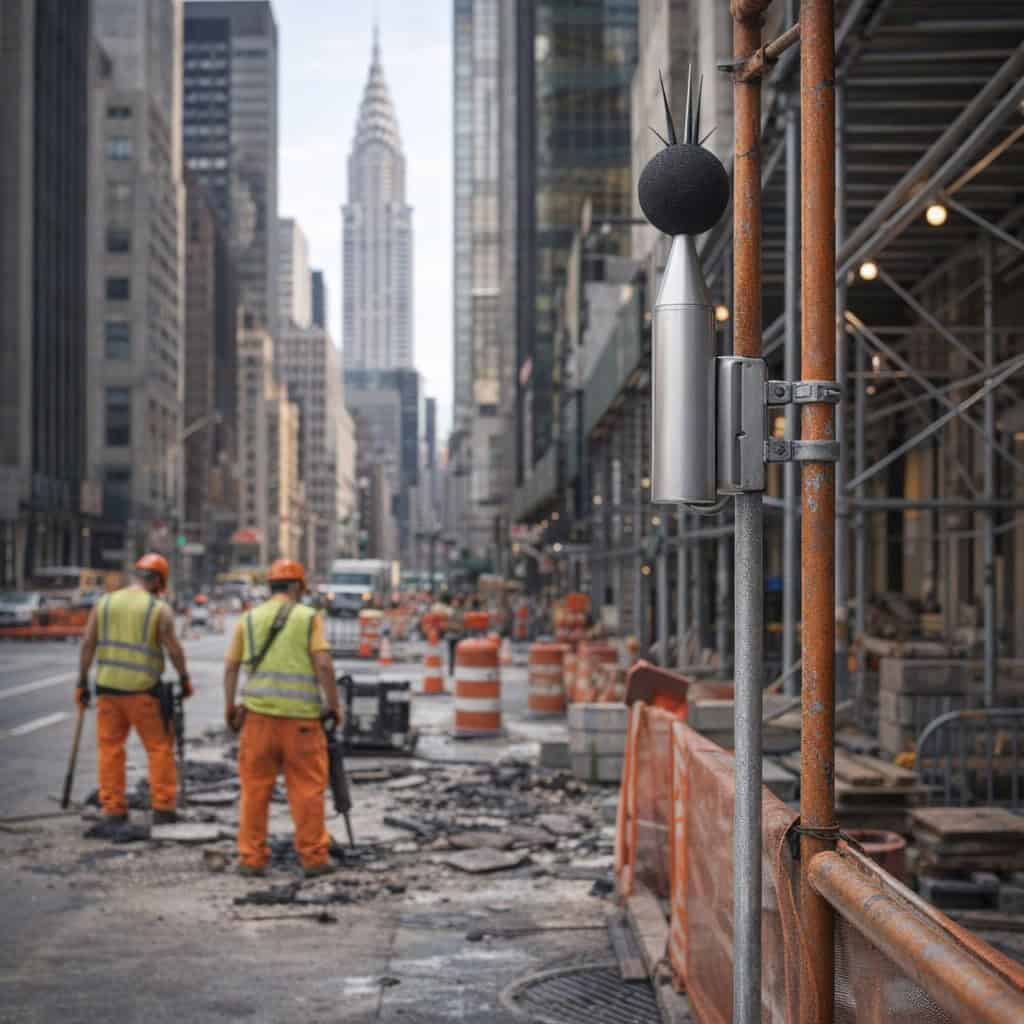
Construction teams must install at least one DEP-approved noise monitoring device and collect construction site sound level data 24 hours a day for the duration of the project.
Noise monitoring devices must meet specific NYC DEP technical standards, be positioned correctly, and record A-weighted decible (dB) sound levels continuously. Data must be transmitted regularly to the DEP through a designated API, including time-stamped readings and maximum sound levels over five-minute intervals.
What this Means for Construction Contractors
For NYC construction sites, be it for new residential buildings (with the exception of affordable housing projects) or repairing streets for better vehicular transport; this means there will no longer be ambiguous noise complaints from residents nearby. Since everything is monitored, teams can get real-time noise threshold alerts exceedances. And if faced with complaints, they can strategize on how to reduce construction noise on NYC job sites, for example, changing equipment, scheduling adjustments, timely communication of changes towards residents, etc.
In effect, construction noise management becomes a continuous and data-driven process that can be managed effectively.
UBY Environment service provides construction noise monitoring solutions that address this specific concern.
At UBY, we see this regulation as part of a longer-term evolution in how cities and construction teams collaborate.
Some examples of UBY Environment solutions that comply with the new requirement:
Large range of compatible noise monitoring sensors like:
SV307 from Svantek with Class 1 microphone and water protection index IP45;
Sigicom C50 Class 1 microphone with long lasting built-in battery
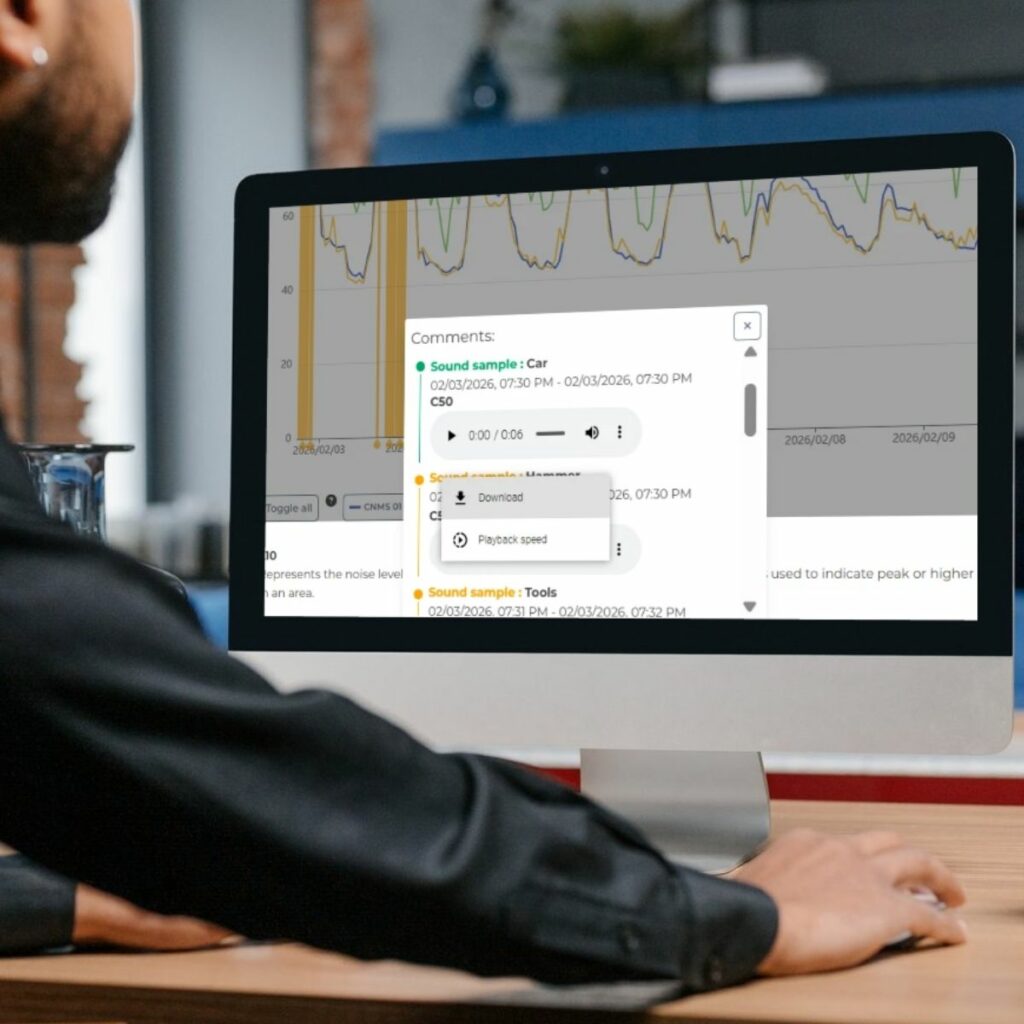
Access to sound recordings and AI-powered noise recognition algorithm to distinguish classify quickly construction site noise from other city noises.
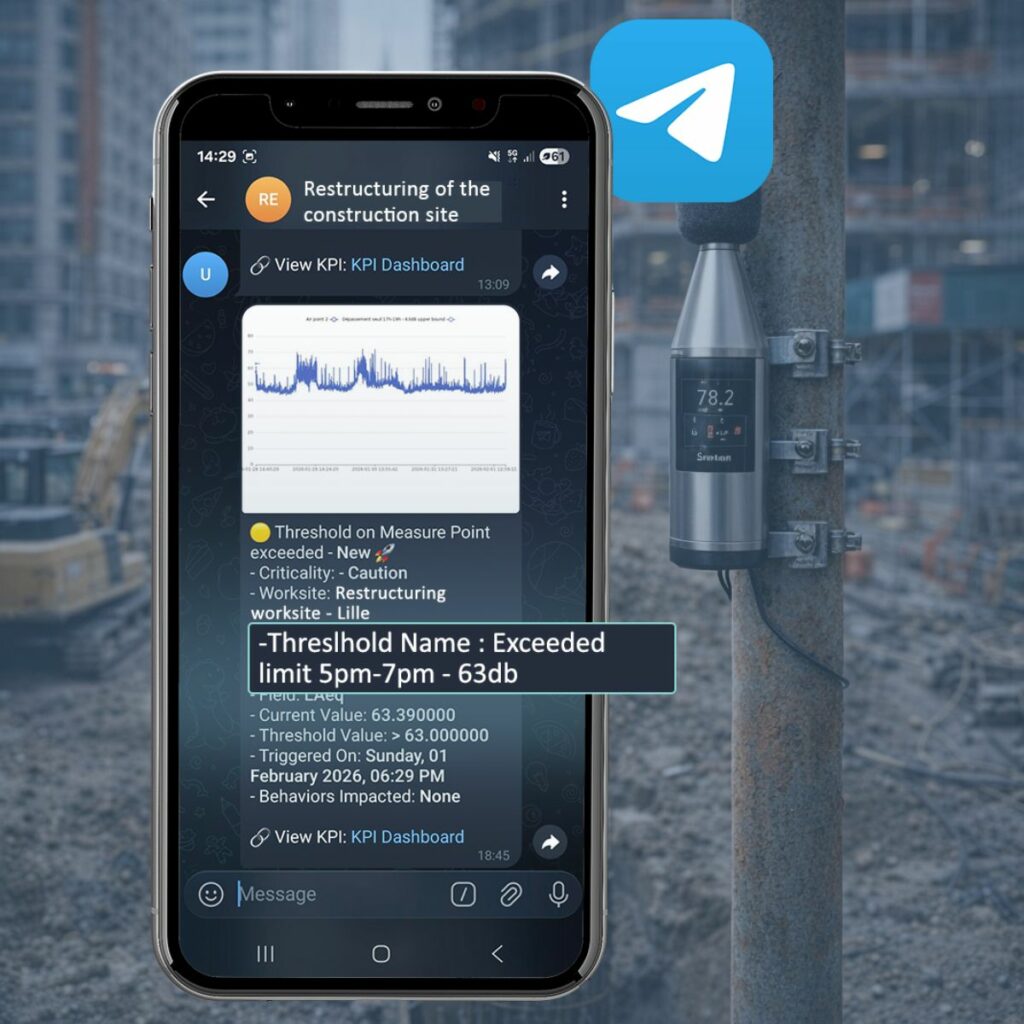
uMonitor Platform: to centralize data from a variety of sensors on a single unified system with cloud storage, gives real-time alerts via email as well as interactive messaging app channels, and automates reporting to stakeholders
and our new smart noise camera, uNoise, to obtain accurate direction of the noise and capture pictures of the source.
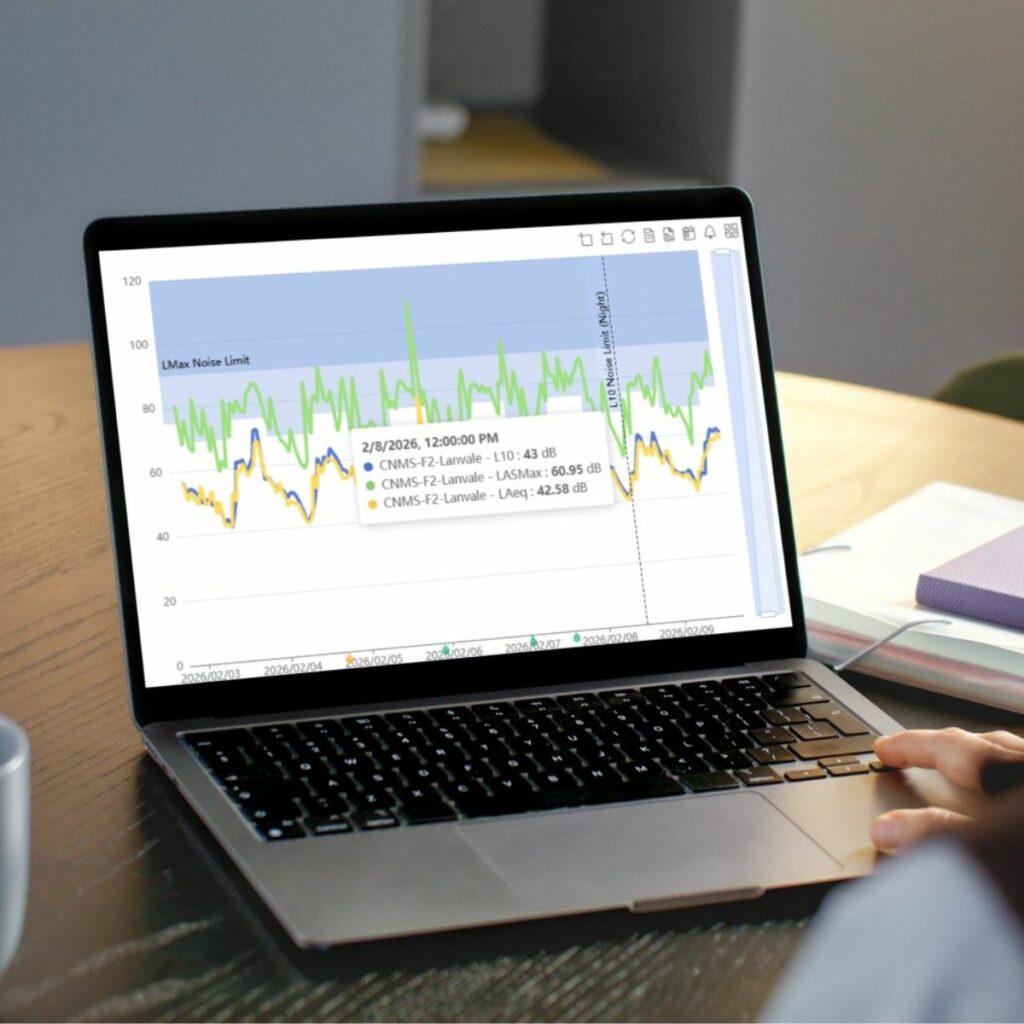
Colour-coded construction noise identification on uMonitor
uMonitor AI Noise recognition for easy identification & classification of construction noise
Automated noise exceedance alerts on messaging app
Capture d'écran de l'interface UBY montrant la surveillance et la gestion des seuils de sécurité.
Investigating construction noise disturbances has never been easier. Rather than treating compliance as a last-minute obligation, UBY enables teams to integrate monitoring into day‑to‑day operations. This reduces risk, improves responsiveness, and supports smoother project delivery.