uNoise: Turning Noise Monitoring into Actionable Insight
On construction and industrial sites, environmental noise is one of the most persistent challenges. Beyond an environmental monitoring metric, it is a driver of community relations and a source of contractual risk. So, measuring it is no longer enough. What matters today is understanding it, explaining it, and acting on it with confidence. However, the market lacked a solution capable of doing so with proof & the capabilities of AI. Enter uNoise by UBY, built to respond exactly to these challenges.
What site operators are really dealing with
Across construction and industrial environments, operators face the same recurring issue: noise complaints without clear accountability.
In practice, noise disturbances rarely come from a single source. Urban construction sites, industrial zones, and infrastructure projects often overlap with traffic, neighboring facilities, and environmental factors like rain or heavy gusts of wind. The result is ambiguity, leaving project owners responsible for noise they cannot control.
Operators are left asking: Is the noise coming from my site? Can I prove it isn’t? What exactly should I fix?
Without clear answers, even well-managed sites struggle to demonstrate the impact of their mitigation efforts. Consequently, it stops being just a technical problem and turns into an operational and reputational one.
Why traditional noise monitoring falls short
Most noise monitoring systems are designed to measure sound levels accurately. But they stop there. They indicate when thresholds are exceeded, but they do not explain why. This gap is critical as it creates a disconnect between measurement and action. Teams can see a problem, but not its root cause.
Even more challenges include:
Environmental conditions like rain or traffic can distort readings
Multiple stakeholders may operate in the same area causing noise overlap
Certain nuisances like pile driving or the sound of grinders are more disturbing to the residents than others, especially during nighttime.
As a result, we get data without clarity and decisions without confidence.
UBY’s uNoise , a part of the broader UBY Environment solution, was developed to bridge this gap by combining regulatory-grade measurement with contextual intelligence.
“With uNoise, our goal was to go beyond simple acoustic measurement and provide operators with an immediate and reliable understanding of the source of disturbances.
By combining Class 1 measurement, wide-angle visual capture, and analytical algorithms, uNoise makes it possible to identify the probable source of an exceedance, distinguish external sources from those originating within the monitored site, and deliver actionable, fact-based insights.
In the field, this ability to classify, contextualize, and objectify noise fundamentally transforms the way stakeholders engage in dialogue and how corrective actions are managed.”
Thus, uNoise is built on two core principles:
1. Measurement must be reliable
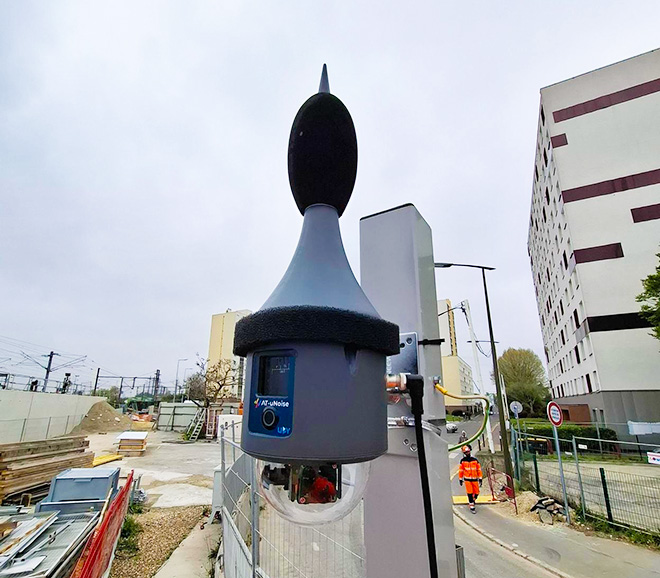
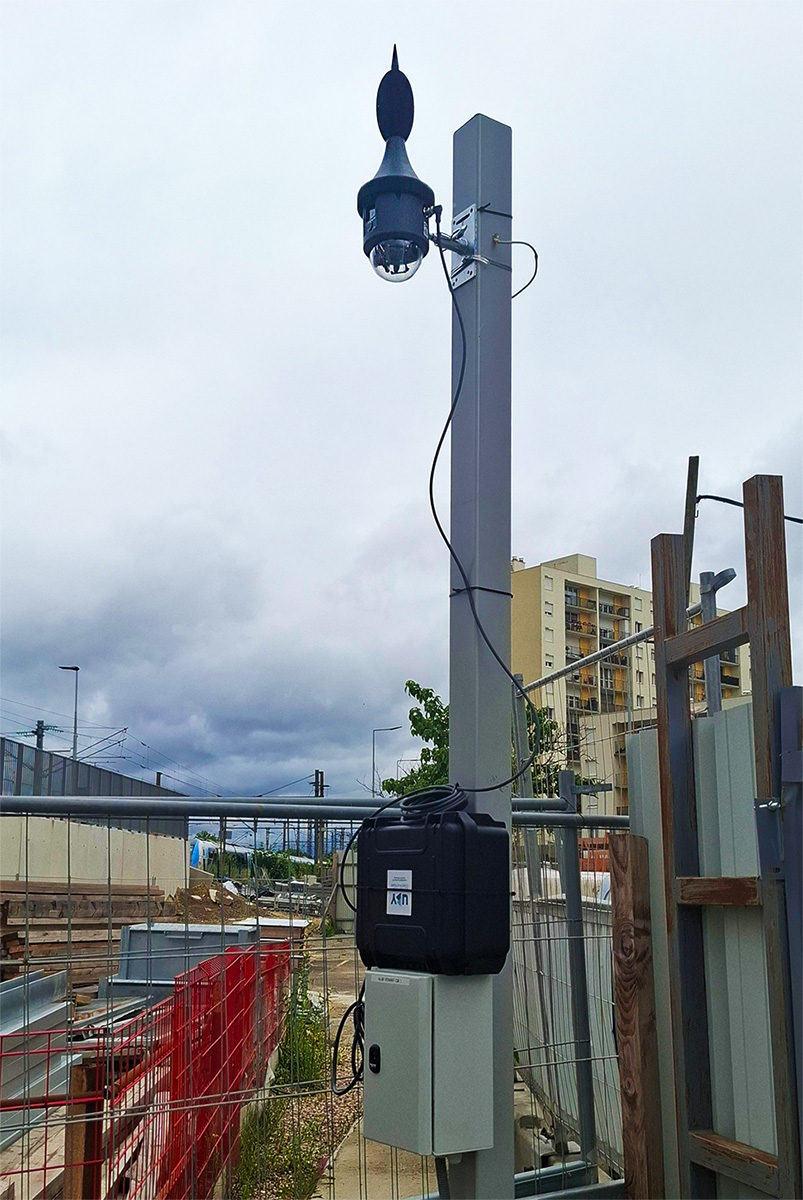
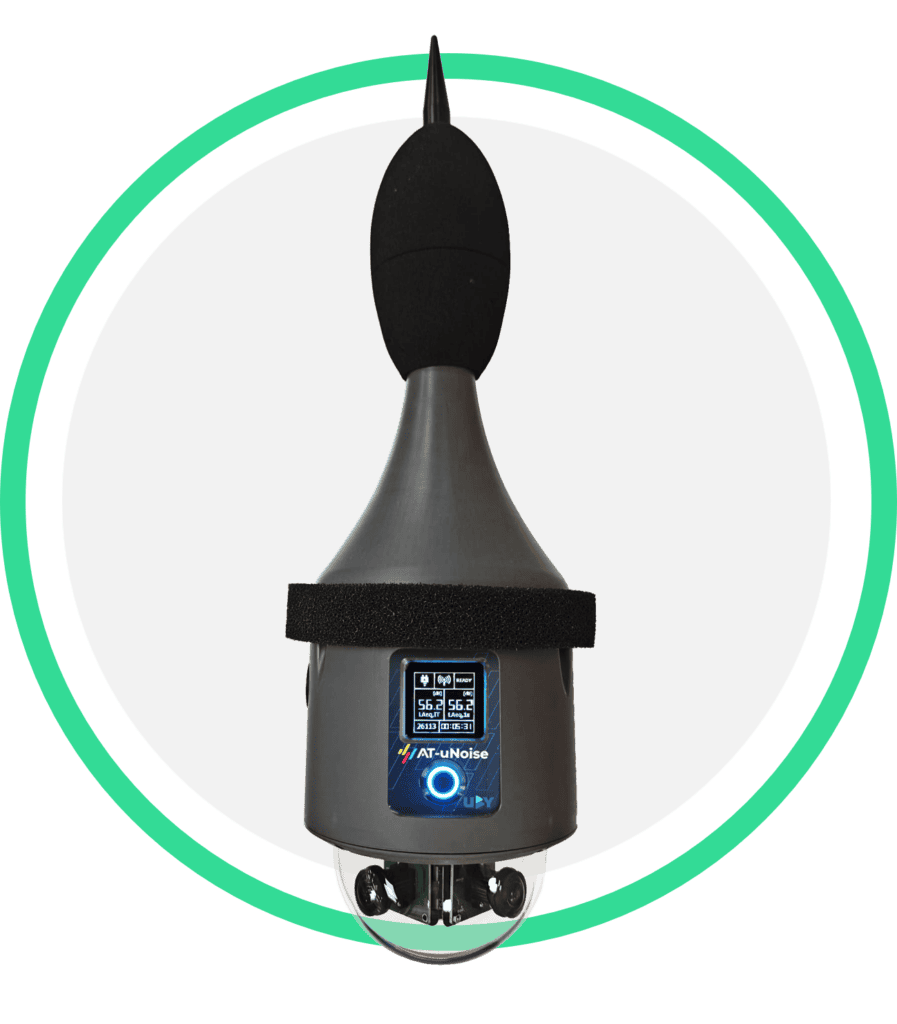
uNoise meets strict acoustic standards of Class 1 (norm NF EN IEC61672-1 and IEC61260-1), can be mounted high on a pole and captures a wide range of acoustic indicators (LAeq, LAmin, LAmax, LCpeak, 1/3 octave, etc). This ensures that data stands up to regulatory and contractual scrutiny.
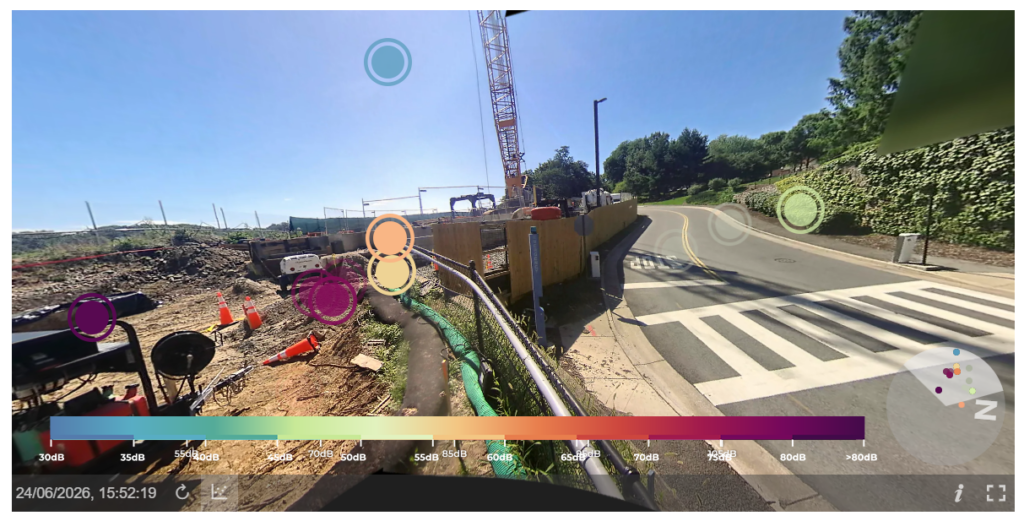
Its 180° or 360° camera pinpoints the nuisance source along with color-coding based on the sound levels. How? By using acoustic triangulation of the nuisance source with azimuth and elevation.
2. Data must be actionable
Beyond measurement, uNoise introduces a layer of intelligence that enables teams to:
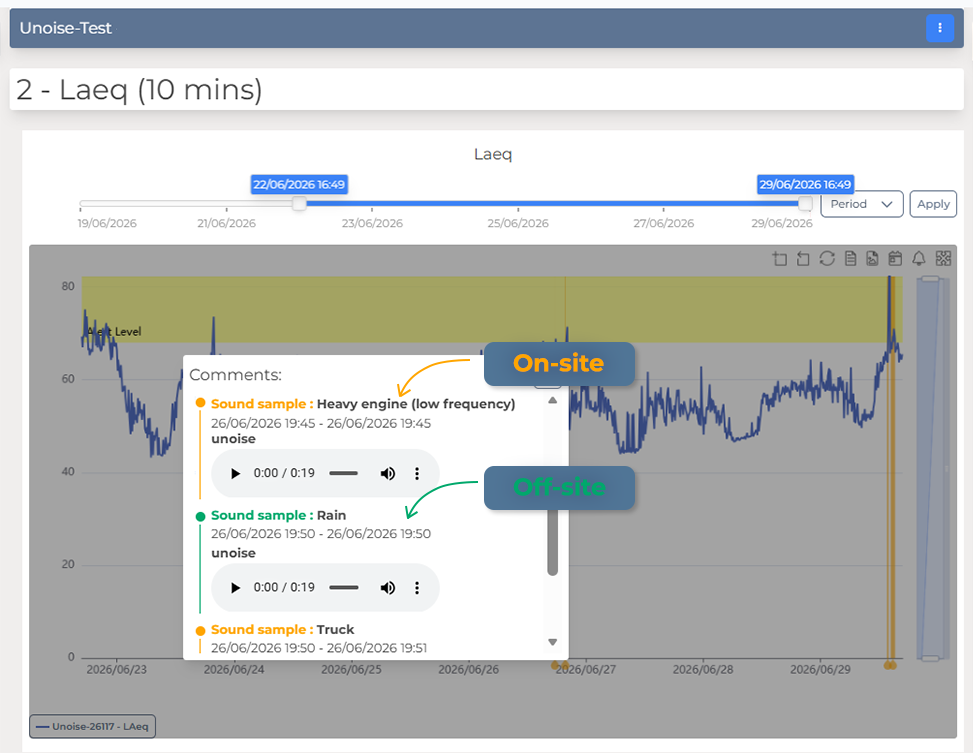
differentiate between noise sources (internal or external; traffic or construction)
understand the context of exceedances (Did it occur during day or night? What else was happening around that time? )
identify responsibility with confidence (with visual proof that gives decibel-based color-coding)
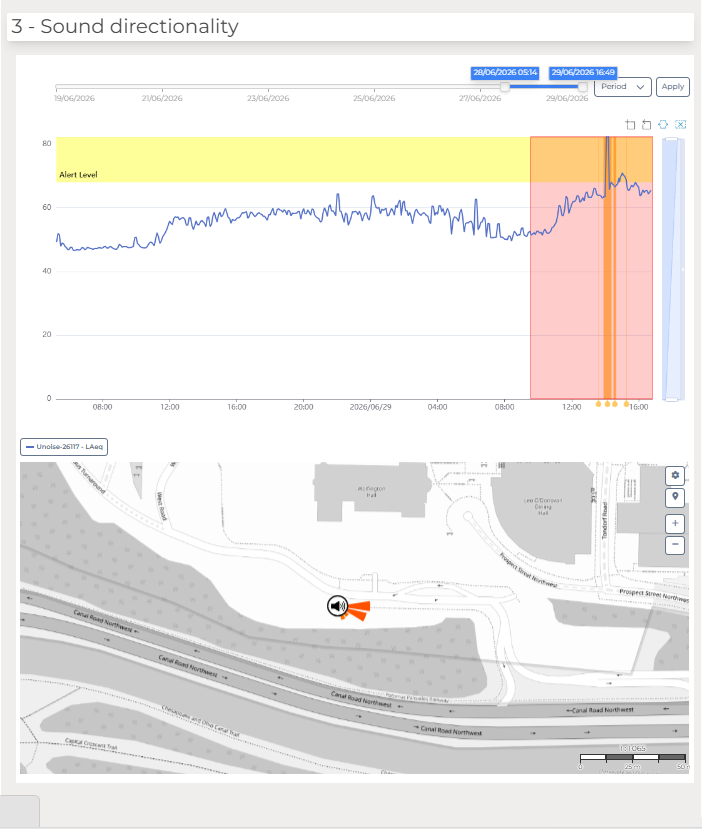
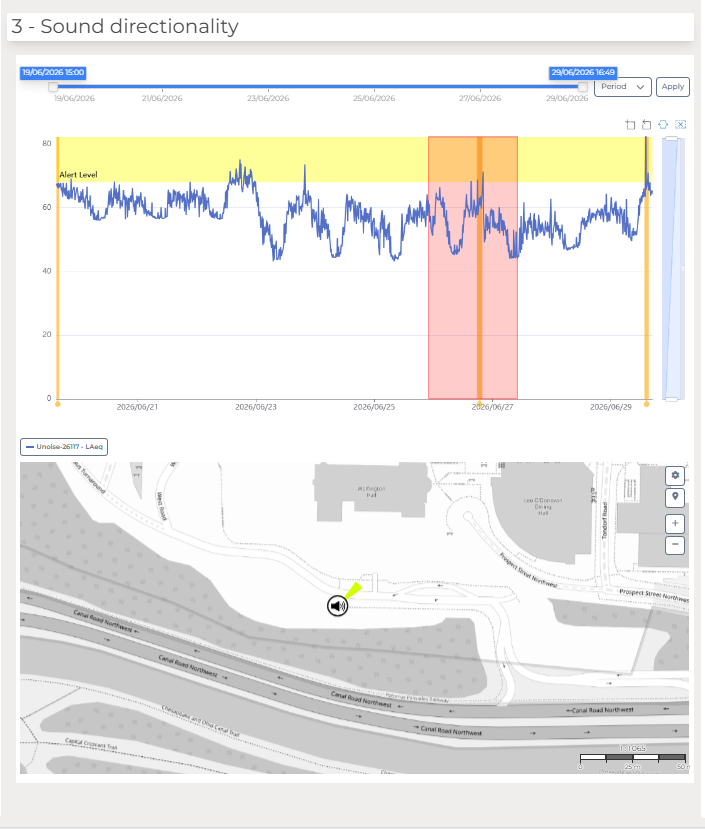
track noise directionality patterns overtime with 3 internal microphones (thanks to tracking and data storage on cloud)
AI-powered nuisance identification on and off-site
Colour-coded noise detection with 180° camera
This transforms monitoring from passive observation into active diagnosis.
By combining acoustic data, contextual information, and analysis, uNoise provides objective and defensible conclusions. This is essential when responding to complaints from residents or local authorities, validating mitigation measures imperative for regulatory bodies and managing multi-contractor environments.
Today, automated noise monitoring is the industry standard for obtaining high-fidelity continuous data without manual intervention. Thus, uNoise stays true to this standard with its compact and discreet hardware, easy installation compared to legacy systems. But beyond that, it can be scalable across projects ensuring that adoption is practical and not theoretical.
In the end, uNoise was not designed to simply measure noise with increased accuracy but to make noise understandable and actionable. By combining precision, intelligence, and usability, it enables site teams to move from uncertainty to clarity, and from data to decisions.
Temporal sound directionality rosette at different time periods