
How can technology take your tunnelling project to the top?
Whether it is rail, road, water or other utilities, tunnels play a vital role in the infrastructure industry. Schemes continue to make headlines, such as the Stonehenge A303 scheme and Lower Thames Crossing.
Across the Atlantic in the US, tunnelling projects like Pawtucket and Potomac River ensure not only structural confidence, but environmental compliance too. And farther east in Hong Kong, tunnels of the Central Kowloon Route are being built in the middle of the city, whilst ensuring utmost safety of the local residents.
The high value of these projects and the hazardous conditions that they are constructed within, make tunnelling a complex and challenging working environment. here ensuring the safety of the team is a top priority. Construction and financial risks are also ever-present, whether related to temporary works, protecting adjacent assets or preventing project delays.
What construction managers need is a solution that gathers all the information necessary to understand the worksite and presents key insights that are easily identified and understood. Thereby, allowing them to optimise schedules, anticipate and avoid risks, and assess the potential impact of their tunnelling activities.
Let’s explore the role technology can play in supporting tunnel projects…
Keeping track of workers in real-time

The Crossrail project, where over one-third of the route is within tunnels, saw costs rise from £14.8 bn to £18.9 bn, with Crossrail CEO Mark Wild mentioning in one interview that a humble pedestrian tunnel at Paddington cost £1 million per metre. Keeping track of details therefore matters, as tunnel project production and logistics of machinery can account for up to 30% of delays.
Solutions like UBY Safe lets you locate workers underground while the site managers could be anywhere. In this way, the project teams can monitor worker headcount per zone, plus the location, all in real-time. They can check and refine schedules with metrics such as time spent by status or activity. They can also monitor compliance on the same platform.
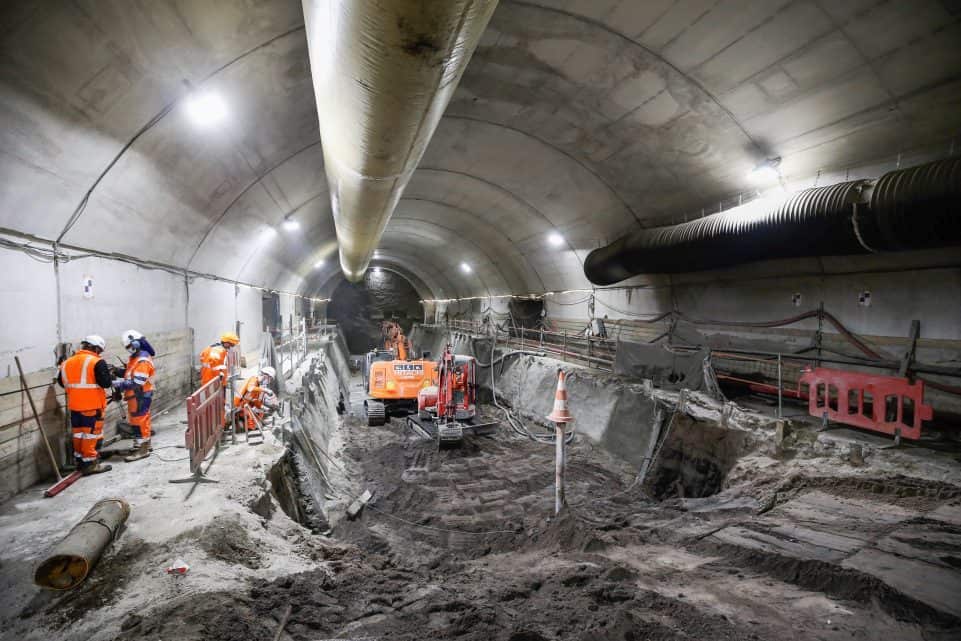
Safety is always a priority
Tunnel workers operate in remote and hazardous environments, making it vital to know where your teams are at all times, and to monitor critical parameters such as air quality. Up-to-date technology can allow the same manager to remotely monitor a variety of sections and sites.
With UBY Safe, managers can immediately see worker headcount by zone and identify individual lone workers. This real-time information enables quick and confident decisions to be made in the event that partial or full evacuation is required, or alert managers when workers stray into hazardous or off-limits areas.
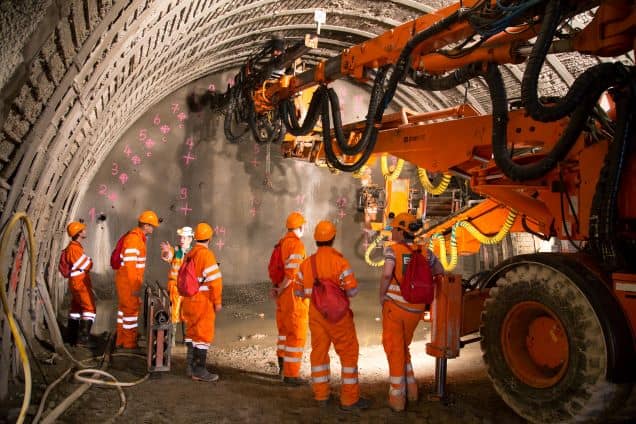
Digital community engagement - protecting well-being and keeping disruption to a minimum
Maintaining good relationships with key stakeholders is vital to any construction project. Tunnel and shaft excavation can be noisy and messy, and no contractor wants works to be slowed or halted due to a noise abatement order. The right technology can allow you to remotely monitor the issues that can impact residents’ well-being, from noise and vibration to mud on roads and air pollution.
uCom allows environmental noise monitoring data to be combined with a more proactive and sophisticated approach to community engagement. Keeping local communities informed and engaged has been shown to improve their health and well-being and make for better-accepted construction works.
The solution helps digitise your schedule, and share what you select with relevant third parties, including a 10-day forecast of noise and alerts of potentially disruptive, upcoming works. You can also invite two-way communication, so you can be seen to proactively respond, and put concerns to rest fast.
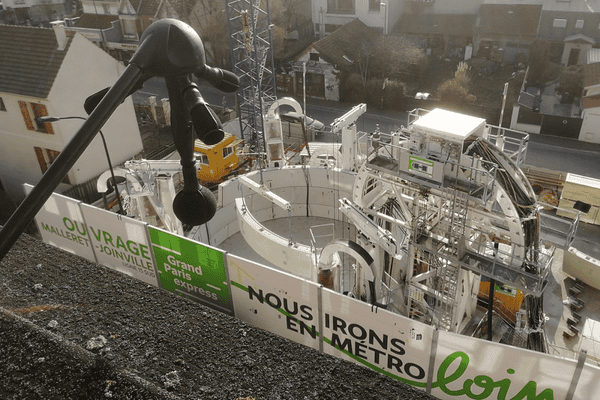
In the US, two miles of tunnel needed to be constructed in a densely populated part of New England. UBY deployed a network of noise and vibration sensors across five sensitive sites, creating a solution that goes well beyond traditional decibel readings. UBY’s smart sensors utilise Artificial Intelligence (AI) and patented algorithms to identify the noise and to provide site managers with a visualisation of where exactly the noise is coming from. The software can establish what is making the noise, distinguishing between construction equipment, and passing traffic, for example, which enables managers to respond to any event or complaint immediately and with confidence.
The smart way to avoid structural risk
Tunnelling projects are often required in the heart of major cities. For example the River Torrens to Darlington (T2D) project that is one of the largest connectivity projects on the Australian continent. Taking a preventive approach to structural monitoring and guaranteeing the stability of existing buildings and other infrastructure assets is vital to reduce risk and project delays. F
Sensors can be deployed to neighbouring buildings and structures and within the surrounding soils to monitor for lateral movement, ground heave and settlement, elevated porewater pressures, groundwater levels, structural cracking, displacement, and vibration. Projects will utilise a variety of tunnelling methods, including tunnel boring machines (TBMs) where appropriate and all will influence the adjacent soils and assets that bear on those soils to various extents. It is critical therefore to measure these movements and parameters to ensure that they remain within defined and safe parameters.
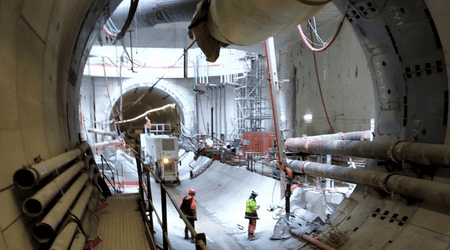
UBY Structure collates all such data on the uMonitor platform in real-time, with automated alerts ensuring all events are accurately and reliably monitored and recorded. Cutting-edge software creates a visual representation of the monitoring data gathered, with overlaid indicators to assist construction managers and engineers (isolines, settlement detected along the tunnel axis, settlement basin). This is clear to understand, and immediate information allows the tunnelling team to refine the efficiency of the tunnelling process and proceed safely.
Looking for support with an upcoming tunnelling project?
Use our contact page to leave a message or request a demo: