ShapeArray™ (SAA) for Railroad Track Monitoring: A Case Study
Source: Measurand
Introduction
Periods of new rail construction & track maintenance require comprehensive monitoring solutions to ensure safety and stability. Railroad trackmonitoring and geotechnical monitoring have become essential operational requirements for any project in this domain. The complexity of protecting active corridors during high-risk construction demands innovative approaches that go beyond conventional monitoring methodologies.
Traditional monitoring tools such as manual survey, tiltmeters and Automated Motorized Total Stations (AMTS) remain industry standards, yet site-specific constraints often call for alternative solutions. This case study demonstrates how the ShareArray™ technology was deployed in a unique manner to overcome the challenges of monitoring a tunnel boring operation beneath an active freight corridor in the Northeast United States. Furthermore, using ShapeArray with uMonitor demonstrated that visualization and reporting need not be stand-alone, but in combination with other sensors present on the site. This gave a wholistic picture of the construction project instead of studying each sensor on its proprietary platforms.
Project Background: Tunnel Boring in Active Rail Environments
Monitoring Objectives
The project had three primary monitoring goals:
Continuous Settlement Monitoring: Capture track and ground settlement data throughout the construction period without gaps in monitoring coverage
Stakeholder Communication: Deliver accessible data through real time, daily and weekly trend reports
Baseline Context Analysis: Monitor construction-phase-specific ground movements while isolating seasonal and frost-related natural ground displacement
Source: Canva
The Challenge
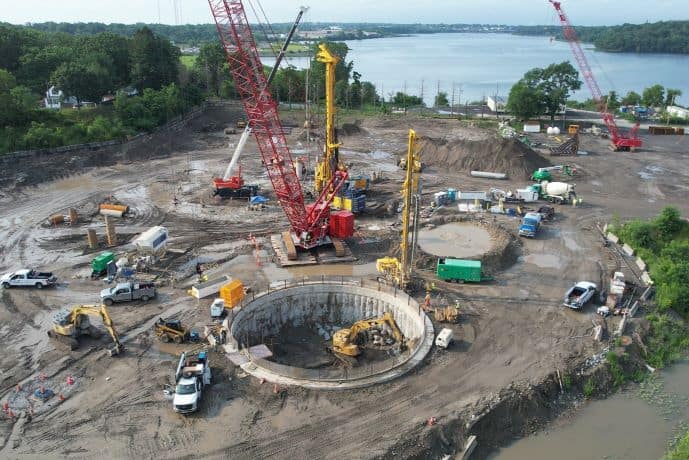
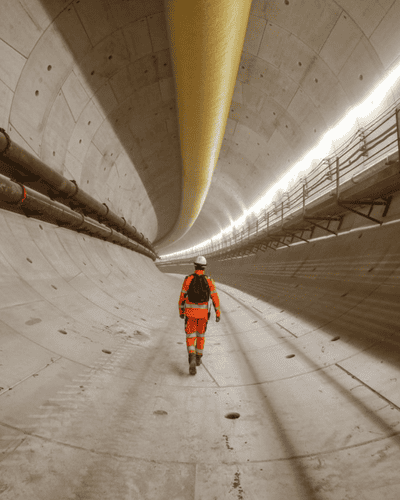
A Tunnel Boring Machine (TBM) was excavating beneath an active rail corridor as part of a major rail tunnel project in the Northeast United States. The project required continuous monitoring for ground and track settlement to ensure both construction safety and the long-term integrity of the existing track infrastructure.
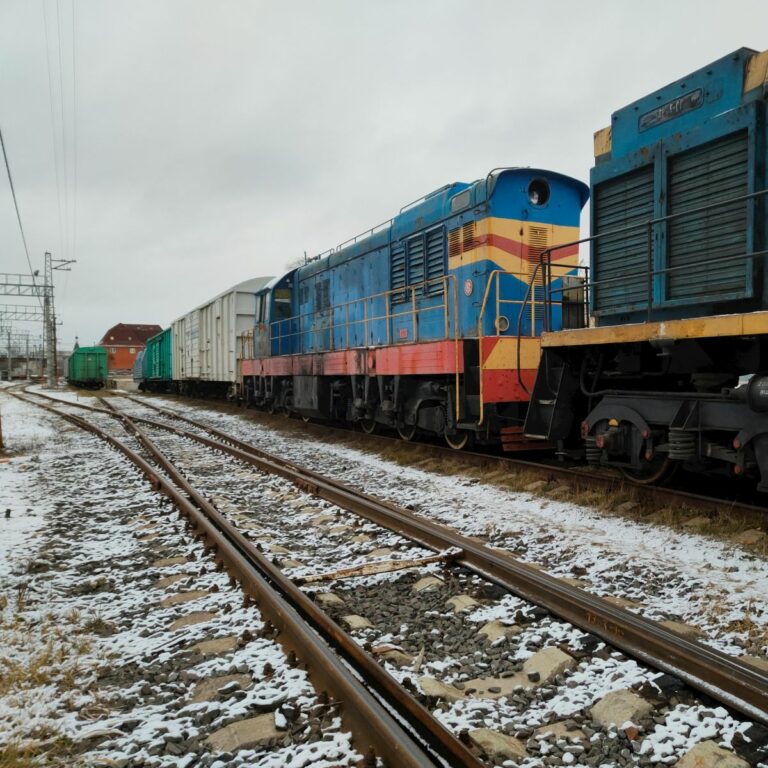
The standard monitoring approach of using an AMTS system proved unsuitable for this application. Freight trains regularly parked on adjacent tracks for extended periods, blocking the optical line-of-sight required for real-time AMTS data collection. This fundamental constraint threatened the project’s ability to capture reliable, continuous deformation data during critical construction phases.
Additionally, a critical complication for this project involved distinguishing construction-induced ground movements from natural environmental effects. Seasonal temperature cycles in the Northeast USA climate meant that the ground would freeze and thaw for prolonged periods during the three-year project duration. This produced natural ground displacement that had to be isolated from TBM-related settlement.
Why ShapeArray™ Technology
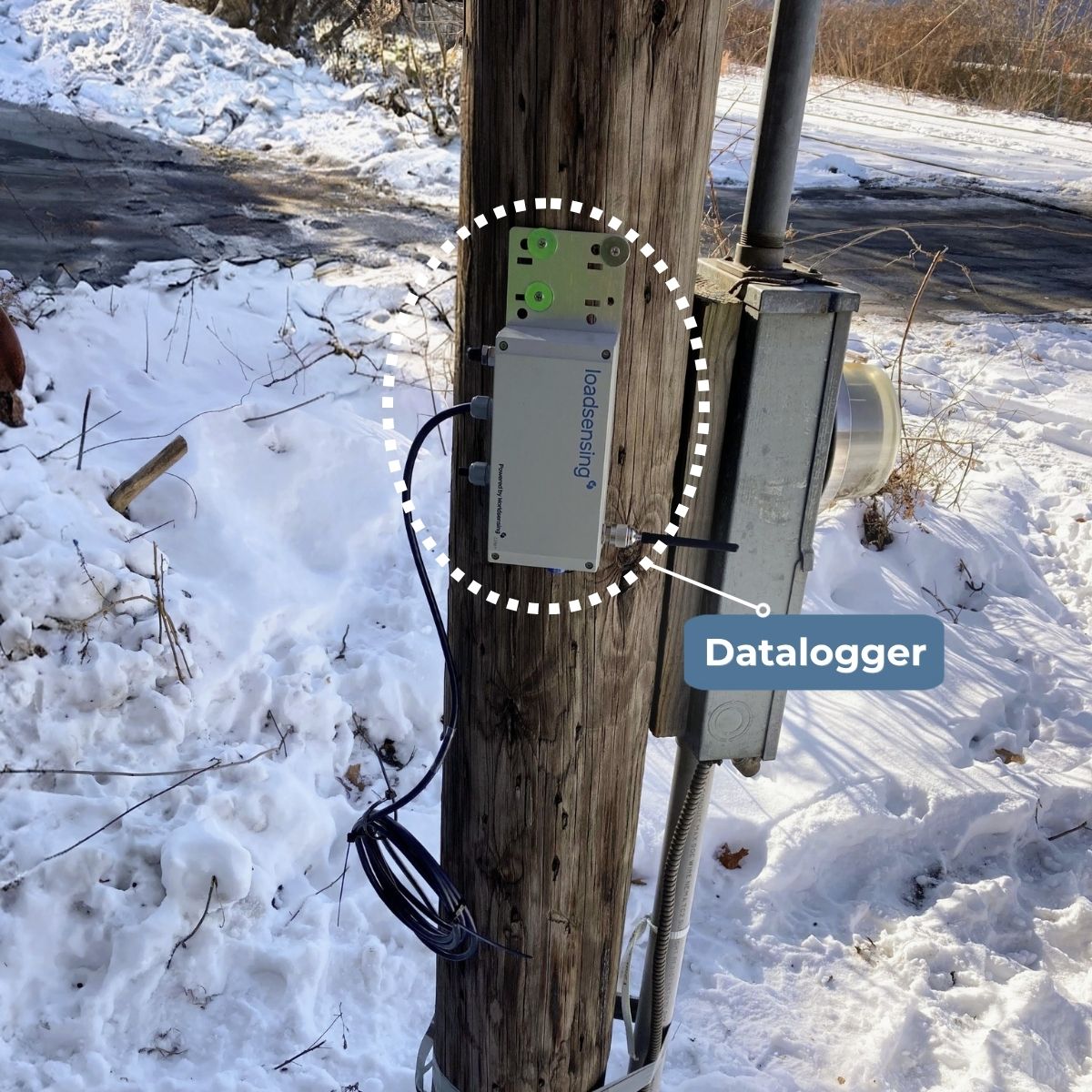
Worldsensing datalogger
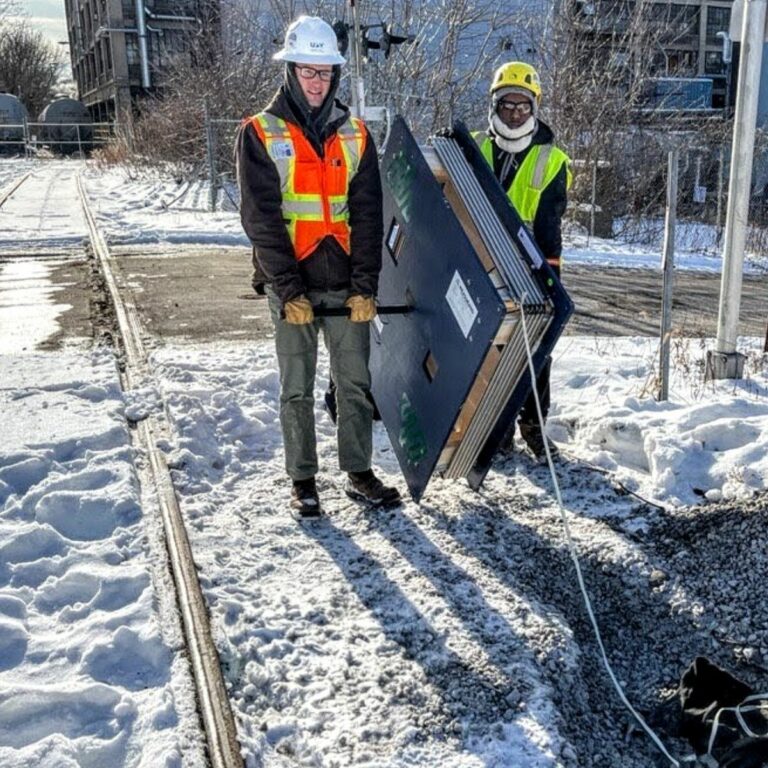
UBY's Solution
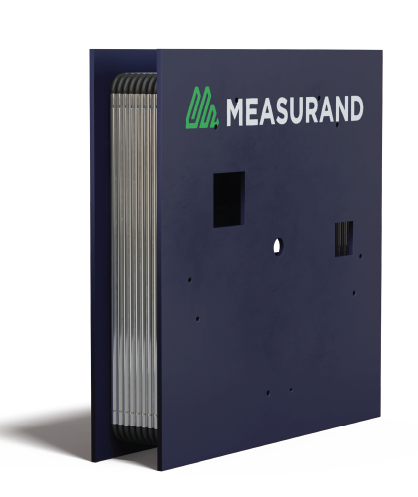
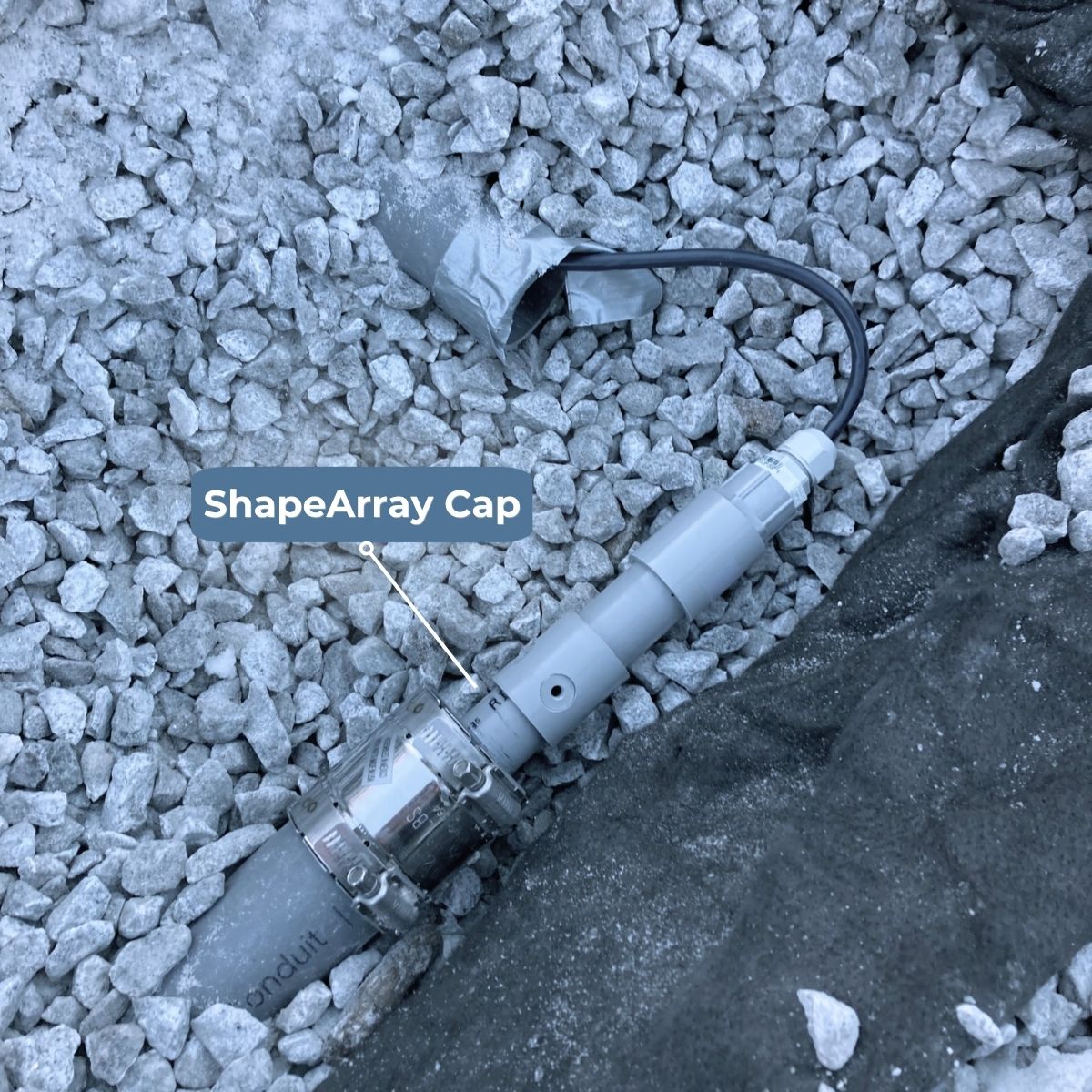
ShapeArray™ (SAAX) was selected as the most suitable tool for this specific monitoring scenario for it addressed the project’s constraints more effectively than alternative approaches. The flexible and automated nature of this sensor helps capture 3D deformations across temporal variations. Specifically, the accelerometers in the SAAX help identify the settlement or heaves based on the tilt in relation to gravity. Key Advantages of ShapeArray™ for Railroad Monitoring:
Independence from Line-of-Sight: Unlike optical systems such as AMTS, ShapeArray™ operates without requiring visibility to external instruments or prisms. This proves essential in rail environments where moving trains often obstruct optical pathways, making continuous monitoring possible despite operational train movements.
Continuous Deformation Profiling: ShapeArray™ delivers a full deformation profile along its entire length rather than isolated point measurements. This continuous monitoring capability provides engineers with a comprehensive understanding of ground behavior, revealing settlement patterns and stress concentrations that point-based systems might miss.
Installation Flexibility: ShapeArray™ sensors can be installed horizontally or vertically, mounted to structures, or installed within boreholes, depending on project-specific monitoring goals. This adaptability accommodates geotechnical monitoring scenarios without needing major design changes.
Specification Compliance In this project, ShapeArray™ was explicitly referenced in the technical specifications, streamlining the approval process and eliminating uncertainty about equipment choice during project planning phases.
ShapeArray™ with Integrated Monitoring Platform
The monitoring solution integrated ShapeArray™ natively with the uMonitor platform, creating a unified system for geotechnical monitoring. Since uMonitor also deploys other sensors required for railroad monitoring like piezometers, GNSS, weather stations, etc., it enabled continuous comparative analysis of the data without juggling multiple software.
The system automated data collection with customizable reporting capable of delivering insights on daily or weekly schedules to project stakeholders within just a few clicks. Rather than presenting isolated sensor readings, the platform established baselines against critical construction phases. This approach ensured that interpretation occurred within the operational context customized by the project management team. Overall, it resulted in reduced false alarms, especially due to the weather conditions, while enhanced vigilance during high-risk construction activities.
The uMonitor platform offered multiple visualization options to support different analytical needs:
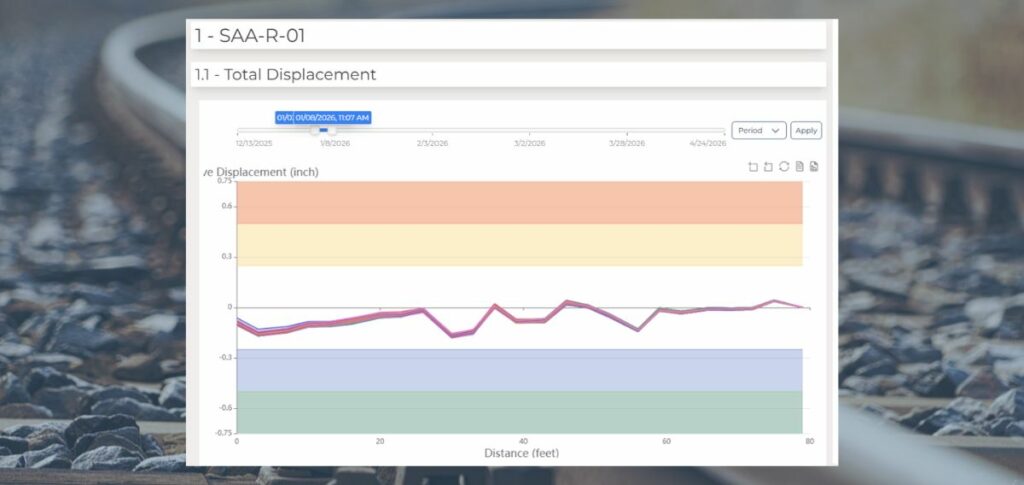
Profile View: Displays deformation along the sensor length, useful for understanding settlement gradients and identifying problem areas
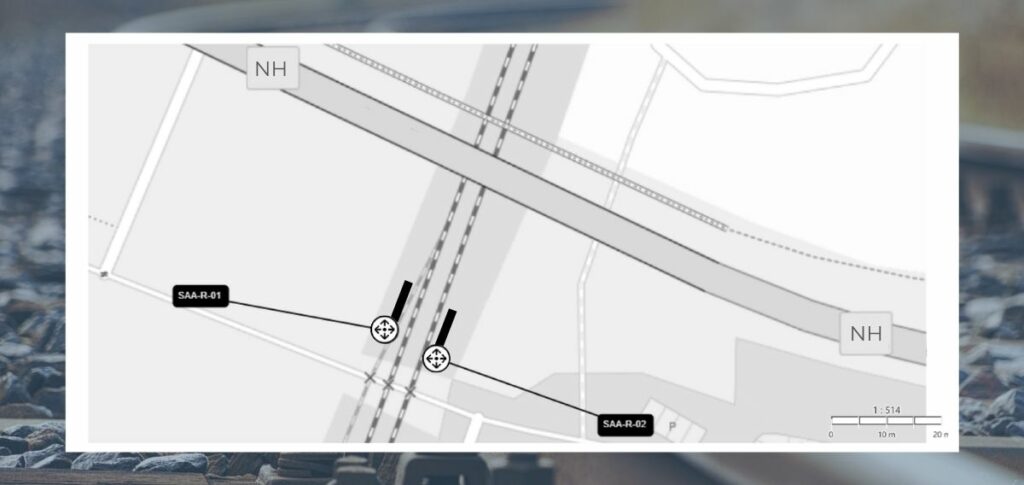
Map View: Presents contourlines representations highlighting settlement changes across defined time periods
These visualization tools enabled project managers and engineers to focus on meaningful changes rather than parsing through raw numerical data, quickening decision-making, and improving communication with non-technical stakeholders.
ShapeArray map view on uMonitor
ShapeArray readings on uMonitor
Key Lessons for Rail Infrastructure Projects
When to deploy the ShapeArray™ for railroad track monitoring:
Tunnel and underground construction
Subway and rapid transit projects where optical line-of-sight cannot be maintained
Projects with strict stakeholder communication requirements demanding accessible trend reporting
Broader Implications
The success of this deployment shows that technology selection in geotechnical monitoring should be driven by site-specific constraints rather than default preferences. While manual survey, AMTS and tiltmeter systems remain industry standards for many applications, specialized scenarios benefit from purpose-built alternatives.
ShapeArray™ represents an effective, out-of-the-box alternative for addressing the specific challenges encountered: continuous monitoring requirements, optical obstructions from operational trains, and the need for comprehensive deformation profiles. By combining specialized sensor technology with an integrated data platform that hosts a variety of sensors, the project achieved continuous visibility into ground movements during critical construction phases while supporting seamless coordination with active rail operations.