Structural monitoring of Bridgewater Bridge in Australia
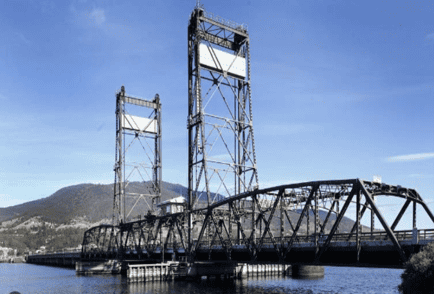
Old Bridgewater Bridge, Tasmania, Australia
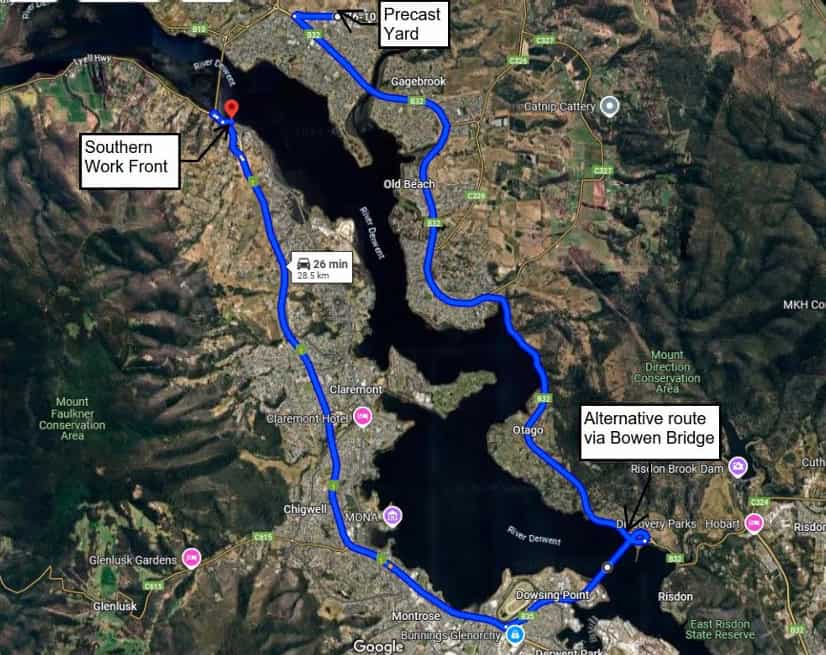
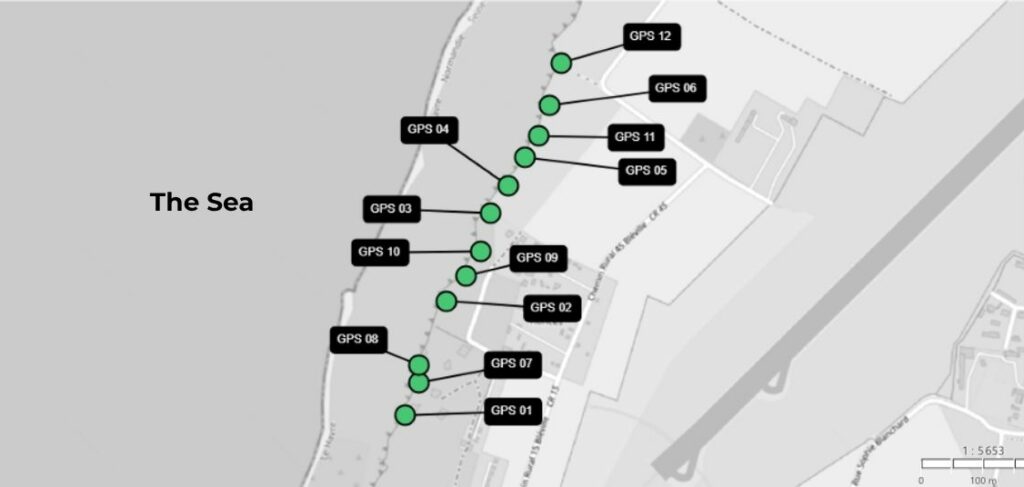
Location of the Precast yard & alternate route
Introduction
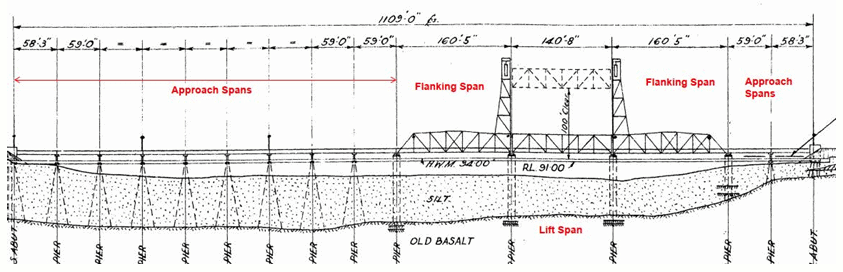
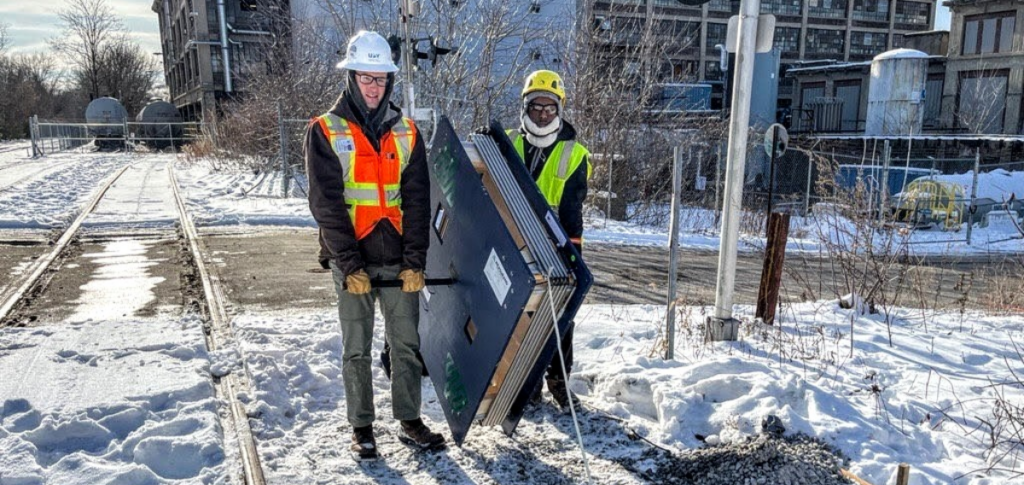
The application of heavy loads to ageing infrastructure requires a thorough understanding of structural health. While the New Bridgewater Bridge in Hobart, Tasmania, Australia was under construction, the main contractor McConnell Dowell and its Sub-Alliance partner VSL investigated the use of the existing Bridgewater Bridge, an 80+ year old structure, to deliver components required for the new bridge in the safest and most efficient manner for the project.
The advantages of using the existing bridge included significantly reduced transportation distance, and hence minimised traffic congestion and faster progression to the next phase of the new bridge’s construction. But the existing critical asset, constructed between 1938 and 1942, was designed to carry considerably smaller loads.
Thus, to support this alternative method for the delivery of superstructure bridge segments, UBY provided a robust bridge health monitoring solution for this critical asset. As part of the project’s risk management strategy, the monitoring system provided information to support the project’s engineering, TARP (Trigger Action Response Plan) and risk management processes.
UBY’s scope of work involved supporting the design of the instrumentation and monitoring system, supplying and installing high-quality field-proven instruments and associated data acquisition system, and providing a user-friendly data management platform – uMonitor – as well as onsite instrumentation and monitoring expertise to ensure successful implementation.
What types of structural monitoring instruments were used?
Structural monitoring can involve measurement of parameters such as displacement, strain and vibration to provide information on the behaviour of existing assets. For this specific project, there was a particular focus on the dynamic response of the bridge (strain and acceleration) when subjected to heavy loads from construction activities. The instruments deployed included vibrating-wire strain gauges andsolar-powered wireless accelerometers.
The strain gauges, connected via cables to a centralised collected strain measurements at 100 Hz and the accelerometers gathered acceleration data at 125 Hz. This need for high-frequency data collection per second made the project challenging, yet highly interesting. Specific locations on the existing structure were determined by the bridge designer to require dynamic monitoring as trucks carrying heavy loads passed over those points.
Due to the speed of the trucks travelling over the bridge, a lower frequency measurement system would not capture behaviours (peak strain and acceleration) at the precise times required, leaving the monitoring team with less useful data.
High-frequency data collection posed another challenge – hundreds of measurements per second per instrument needed to be logged and analysed by a capable data management system, which conventional monitoring platforms are not typically designed to handle.
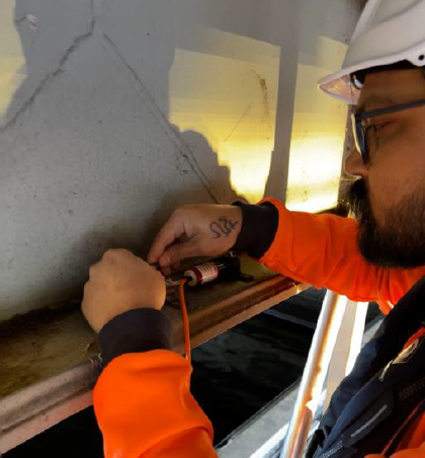
Accelerometer installed on the Bridge.
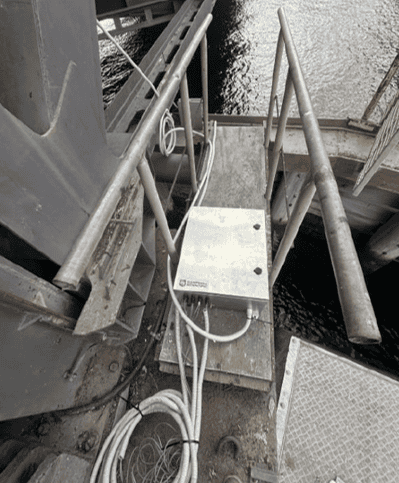
Datalogger installed on the Bridge
How was the structural monitoring data managed?
The high-volume monitoring data was efficiently acquired, transferred and presented visually via the uMonitor platform.
UBY developed a custom data acquisition system with an industrial PC that could remotely acquire raw information from the strain gauges. Raw data from strain gauges and accelerometers was transmitted to an FTP server, allowing the client to access detailed measurements. For advanced data visualisation to support decision making, the maximum value recorded each minute on both types of sensors was displayed in uMonitor. The platform provided statistical information alongside graphs and alerts when defined thresholds were exceeded. Calculations of the 1-minute average peak measurements would give a single snapshot of the high volume of data, essentially making analysis and decision-making faster and easier for the project team.
Strain Measurement data
Data collection frequency: 100Hz/sec = 6000 data points per minute
Strain Measurement Data displayed on uMonitor
Peak measurement per minute
Strain Measurement threshold exceedance on uMonitor
In a give time period
Multi-level alert thresholds automatically notified the project team on their shared messaging group. ‘Amber’ alerts would signify precaution while ‘red’ alerts meant that a threshold was exceeded. This ensured that the construction team could proactively manage the asset during segment transport. The ability to access essential data from anywhere in near real time via the uMonitor cloud-based structural monitoring platform was highly advantageous to the team.
What challenges are involved in bridge monitoring?
Installation of the instruments on the existing bridge presented another set of challenges because the equipment had to be installed underneath the existing bridge. Instrumentation experts carried out these operational activities from a boat, which required careful planning around access limitations, tidal fluctuations and other site constraints.
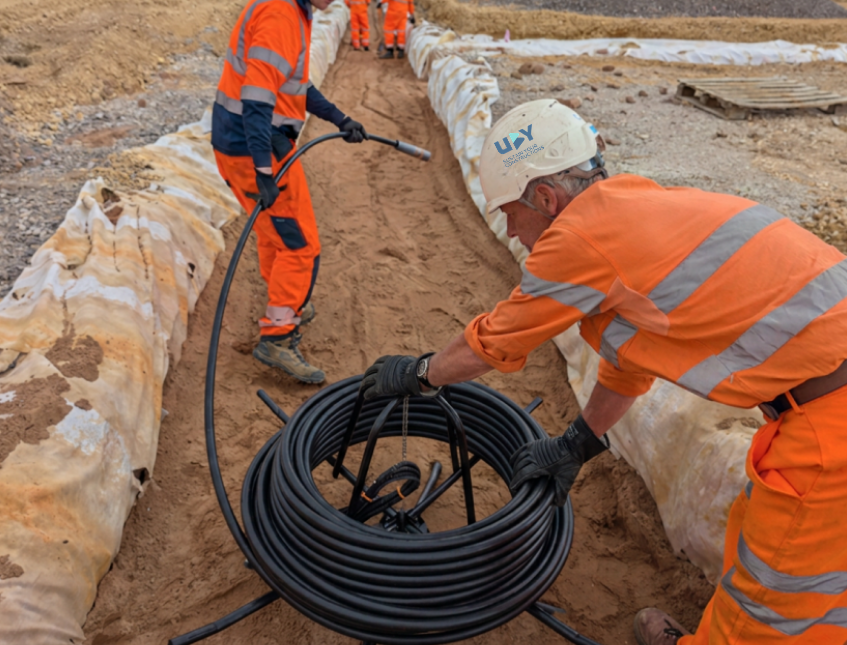
Furthermore, some instruments also required more than 100 metres of cable between the monitoring location and datalogger, adding further logistical complexity to the installation and commissioning of the monitoring system.
Acceleration data collection frequency
125Hz/sec = 7500 data points per minute
Acceleration data collection displayed on uMonitor
The structural monitoring of the existing Bridgewater Bridge demonstrates how tailored monitoring solutions can effectively support project teams when existing assets face demanding or atypical loading conditions. Successful implementation not only involves selecting the right instruments but pairing them with expert deployment and a data management platform that can be adapted to meet the unique constraints of the project.
“UBY assisted us [McConnell Dowell and its Sub-Alliance partner VSL] greatly during this process and were able to provide a bespoke system that catered / met the rigorous and complex requirements set out in the TARP [Trigger Action Response Plan]. This in turn enabled our team to significantly reduce the travel time of the project’s bridge segment deliveries as well as reduce the requirements of additional escorts required which greatly reduced safety risk and provided economic benefit to the project.”
Worldsensing: Tunnel Convergence Monitoring with Laser Tiltmeters
Understand how UBY expertly deployed the Worldsensing Laser Tiltmeter for tunnel convergence monitoring along with uMonitor for advanced analysis features. ...